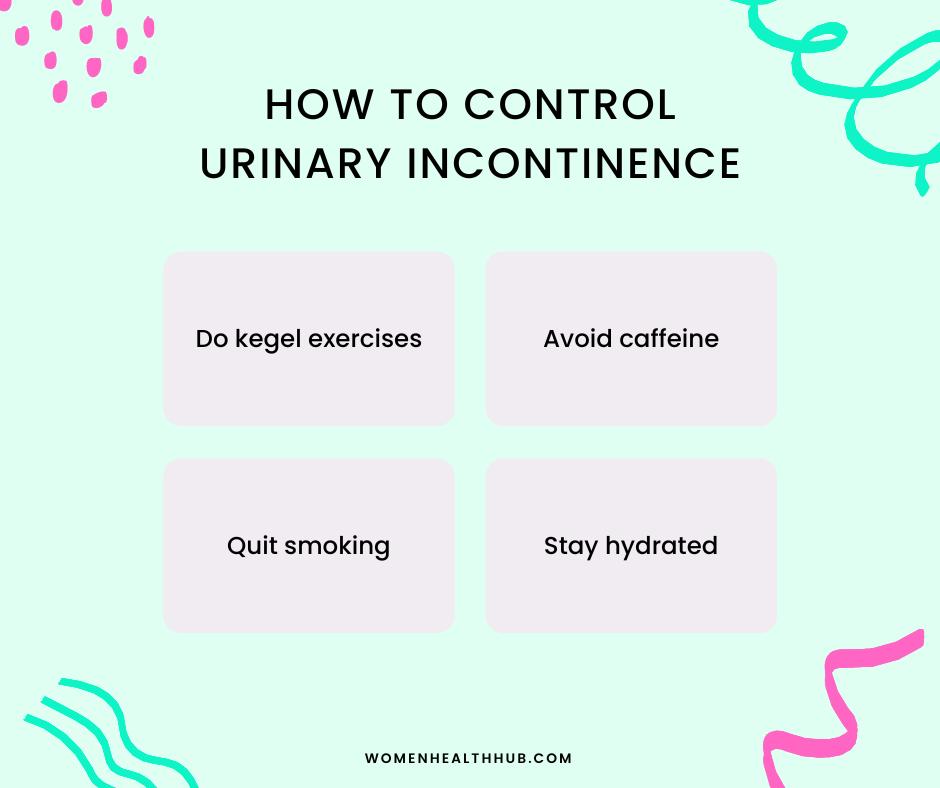
Peeing While Running Postpartum While there are numerous therapy choices, they can take time to reduce signs and symptoms. To assist make sure that the involuntary leakage of pee isn't influencing your life too seriously, bladder control items and urinary incontinence items are a fantastic alternative. Byram Medical care has a variety of incontinence items to help. The diary might help your medical professional or nurse see patterns in the incontinence that provide ideas about the possible cause and treatments that might help you. If you have urinary incontinence, you can make a consultation with your health care provider, your OB/GYN, or a registered nurse professional. Your doctor or registered nurse will certainly deal with you to treat your urinary incontinence or refer you to a specialist if you need different treatment. Some women have bladder control problems after they quit having periods. Scientists believe having low levels of the hormonal agent estrogen after menopause might weaken the urethra.8 The urethra assists maintain pee in the bladder up until you are ready to pee. Any weakness or damage to the urethra in a woman is more probable to create urinary system incontinence. He evaluates your case history, along with any type of medication you're taking, to recognize all the elements that could be playing a role. However, it is an usual medical problem and has a number of treatment options. If you see any kind of signs and symptoms, talk to your doctor early to determine the most effective approach to management and treatment. Long-term incontinence after having a child isn't normal, and it is very important to recognize the indicators so you can get the treatment you need. Specific foods and beverages can irritate the cellular lining of your bladder, leading to increased seriousness, frequency, or leakage. Typical bladder toxic irritants consist of caffeine (found in coffee, tea, delicious chocolate, and some soft drinks), carbonated drinks, alcohol, spicy foods, artificial sweeteners, and acidic foods like citrus fruits and tomatoes.
- Actually, it impacts up to 50% of postpartum ladies, and it's crucial for brand-new moms to recognize the signs.In this instance, the bladder sphincter has actually lost some function as a result of the constant increase in pressure, making it tough to hold in urine.With our existing understanding, several women would have to have cesareans in order to prevent one lady from establishing urinary incontinence.Some women have bladder control issues after they quit having durations.During the final stages of labor, pushing the child with the vagina to delivery, these muscular tissues undergo substantial forces and stress.This sort of incontinence is noted by an unexpected, extreme impulse to pee, followed by leakage-- occasionally without much caution and despite just how complete your bladder is.
Incontinence After Delivery-- There Are Options
What does postpartum incontinence feel like?
Around 1 in 3 ladies experience urinary system incontinence after having an infant. After giving birth, you could leak urine when you laugh, cough, sneeze, lift something or exercise. Maternity hormonal agents, the weight of your womb and having a vaginal birth can all extend the pelvic flooring muscular tissues that support your bladder.
Therapies For Postpartum Urinary Incontinence
Before maternity, you were crushing training runs and seeing physical fitness gains. But after, baby, going back to running, you leakage pesky swimming pools at every action. You're not the only one - over half of new moms take care of awkward leakage like tension urinary system incontinence (SUI) hindering their activity pleasure. Episiotomy is a current technique, created in order to replace a straight, clean, easy-to-repair surgical incision for the rugged tear that could or else take place. Reducing this laceration is additionally intended to reduce labor by providing the child's head Pilates even more room so shipment may be easier and much faster. It was thought that faster delivery would reduce the risk of injury to the mom's bladder, and would be gentler for the baby's head. Nonetheless, researches reveal no proof that these assumptions hold true. This is the initial evaluation to report the prevalence and occurrence over the initial 12 months post-partum and bother in connection with post-partum UI. Four in 10 females improved their signs and symptoms after attempting Kegels.9 Kegels can be done everyday and may be particularly helpful while pregnant. They can help stop the weakening of pelvic floor muscle mass, which frequently takes place while More helpful hints pregnant and giving birth. Your pelvic flooring muscle mass may likewise damage with age and less exercise.